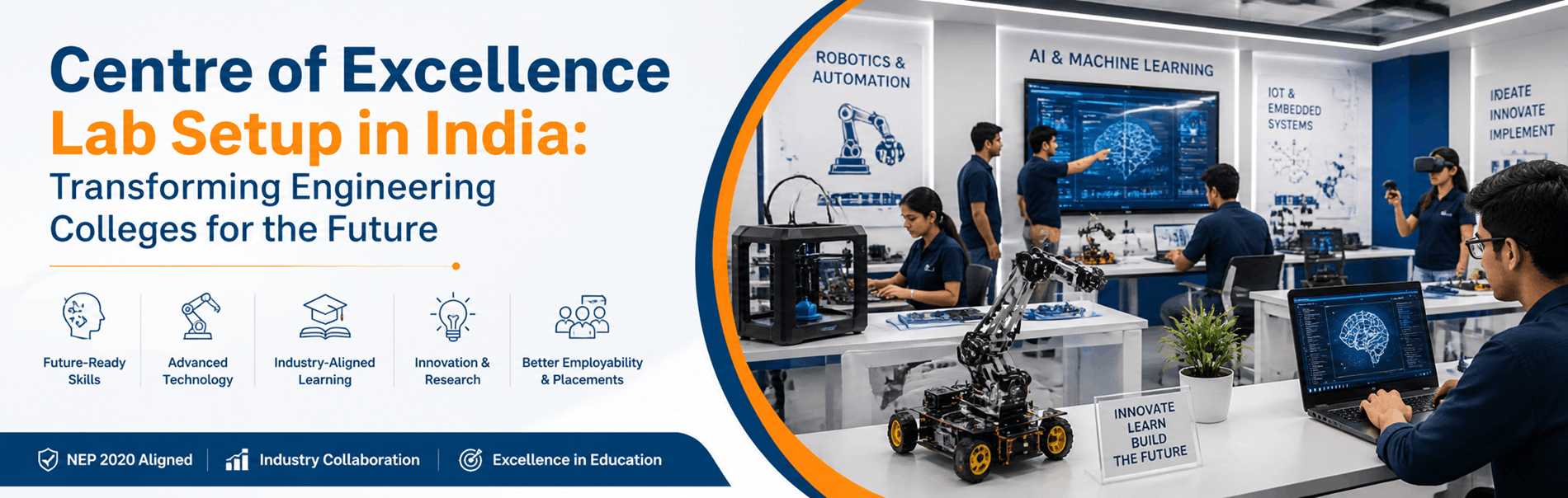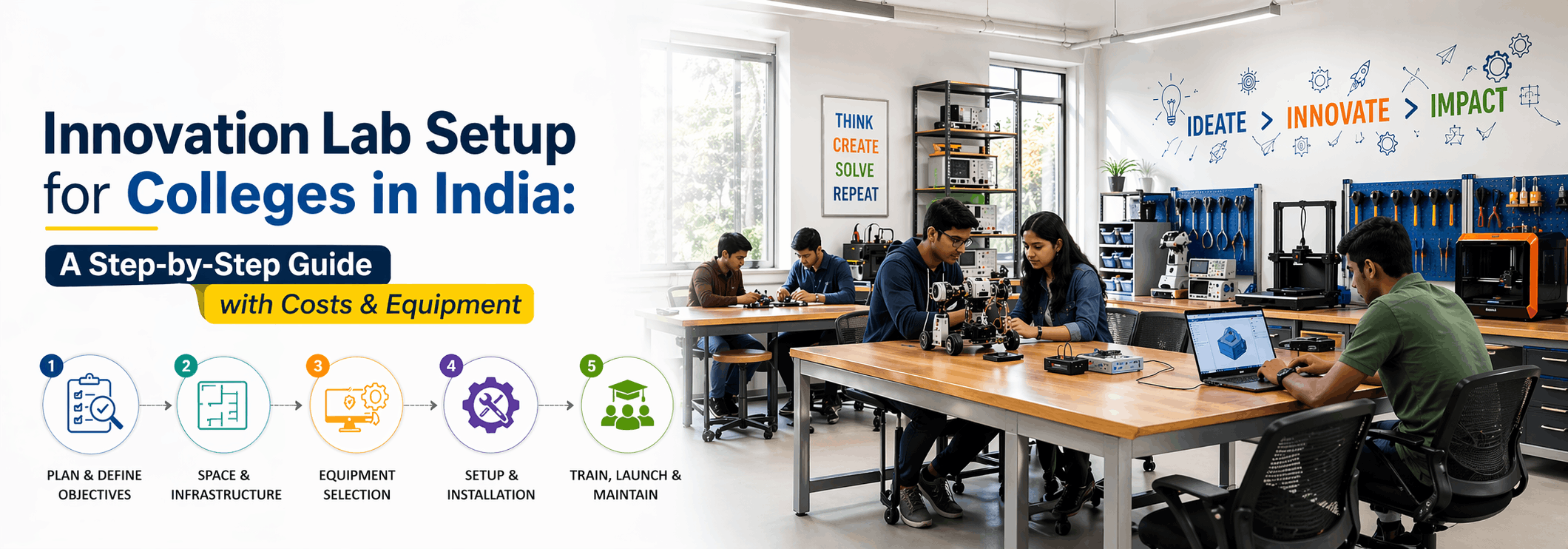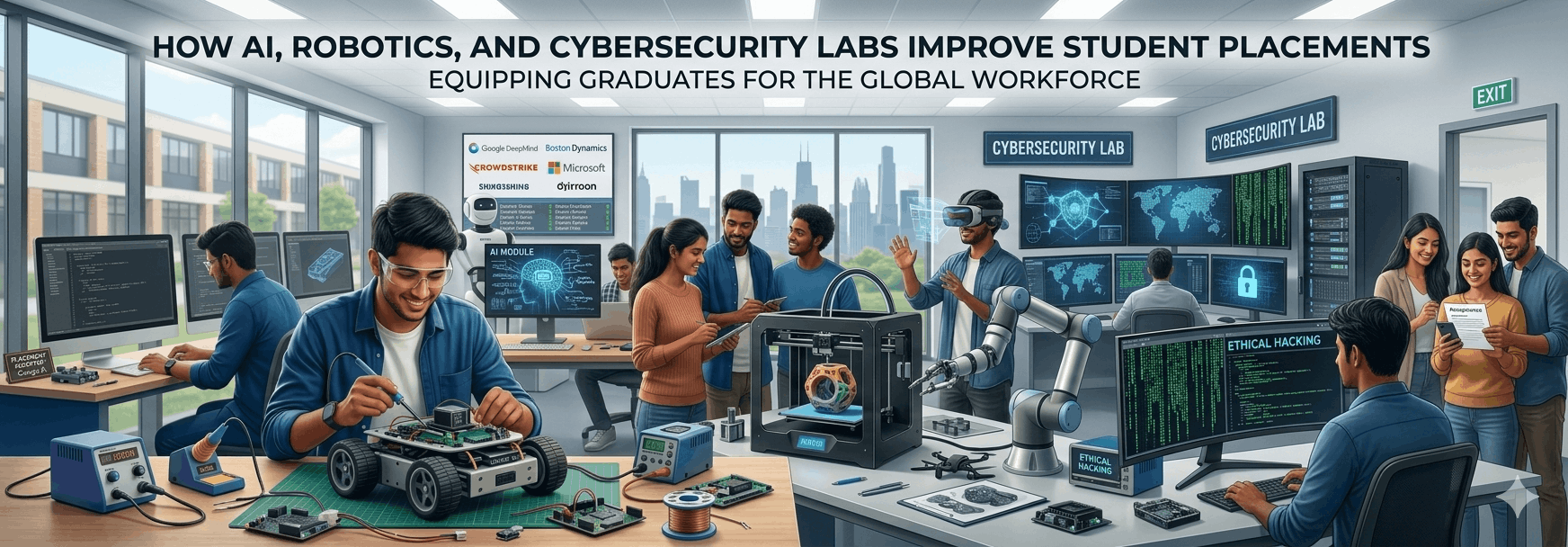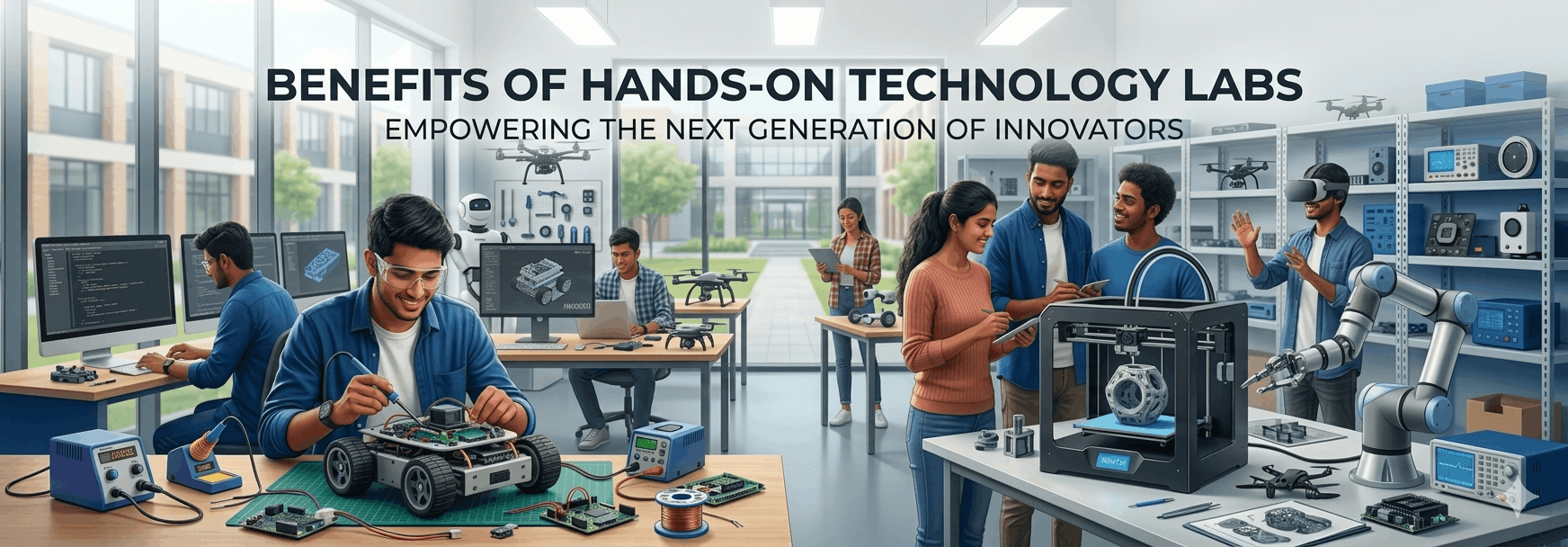
In today’s fast-evolving technological world, traditional classroom learning is no longer enough. Engineering colleges, universities, and technical institutes are now embracing Center of Excellence (CoE) Labs to bridge the gap between academic knowledge and industry expectations.
A Center of Excellence Lab is a specialized learning ecosystem designed to provide students with hands-on experience in emerging technologies like Artificial Intelligence, Robotics, IoT, Automation, Data Science, and Embedded Systems — preparing them for real-world challenges and future careers.
What Is a Center of Excellence Lab?
A Center of Excellence Lab for engineering colleges is an advanced innovation facility that combines modern lab infrastructure, industry-aligned curriculum, and experiential learning.
These labs focus on:
- Practical skill development
- Industry-oriented projects
- Research and innovation
- Startup incubation
- Faculty upskilling
- Student certification programs
Unlike traditional labs, CoE labs emphasize learning by doing, enabling students to work on live projects, prototypes, and real-world applications.
Why Engineering Institutions Need CoE Labs Today
With Industry 4.0 transforming the job market, employers are seeking graduates who are skilled, adaptable, and innovation-driven.
Here’s how a Center of Excellence Lab setup in Universities helps:
Enhances Student Employability
Students gain exposure to advanced tools and technologies, making them job-ready from day one.
Supports NEP 2020 Goals
CoE labs promote multidisciplinary learning, innovation, and practical education aligned with India’s National Education Policy.
Strengthens Industry Collaboration
Institutions can partner with technology companies for internships, certifications, and joint research.
Boosts Institutional Reputation
Colleges with CoE labs attract better admissions, placements, and accreditations.
Encourages Research & Entrepreneurship
Students develop prototypes, patents, and startup ideas through innovation-focused environments.
Key Technology Domains in Center of Excellence Labs
Modern CoE labs for universities and engineering colleges typically cover:
- Artificial Intelligence & Machine Learning
- Robotics and Automation
- Internet of Things (IoT)
- Embedded Systems
- Mechatronics
- Cyber Security
- Data Science
- Smart Manufacturing
These domains prepare students for future industries while strengthening technical foundations.
Components of a Complete CoE Lab Setup
A professional Center of Excellence lab solution usually includes:
- Advanced lab equipment and hardware
- Software tools and licenses
- Structured curriculum and training modules
- Faculty development programs
- Student workshops and certifications
- Project-based learning kits
- Industry mentorship support
This integrated approach ensures sustainable learning outcomes.
Who Can Benefit from CoE Labs?
- Engineering Colleges
- Universities
- Polytechnic Institutes
- Technical Training Centers
- Skill Development Institutions
Whether it’s undergraduate education, postgraduate research, or vocational training, CoE labs cater to diverse academic needs.
Impact of Center of Excellence Labs on Students
Students trained in CoE environments:
- Develop problem-solving skills
- Gain real-world project exposure
- Improve coding and design abilities
- Build innovation mindset
- Become confident future engineers
They graduate not just with degrees — but with practical expertise.
Future of Engineering Education in India
As India moves toward becoming a global technology hub, Center of Excellence Labs will play a critical role in shaping the next generation of engineers and innovators.
Institutions investing in CoE labs today are preparing their students for tomorrow’s careers in AI, Robotics, Automation, and smart technologies.
A Center of Excellence Lab for engineering colleges, universities, and institutes is no longer optional — it’s essential.
By integrating industry-aligned training, modern infrastructure, and experiential learning, CoE labs empower institutions to deliver future-ready education and produce skilled professionals who can drive innovation.