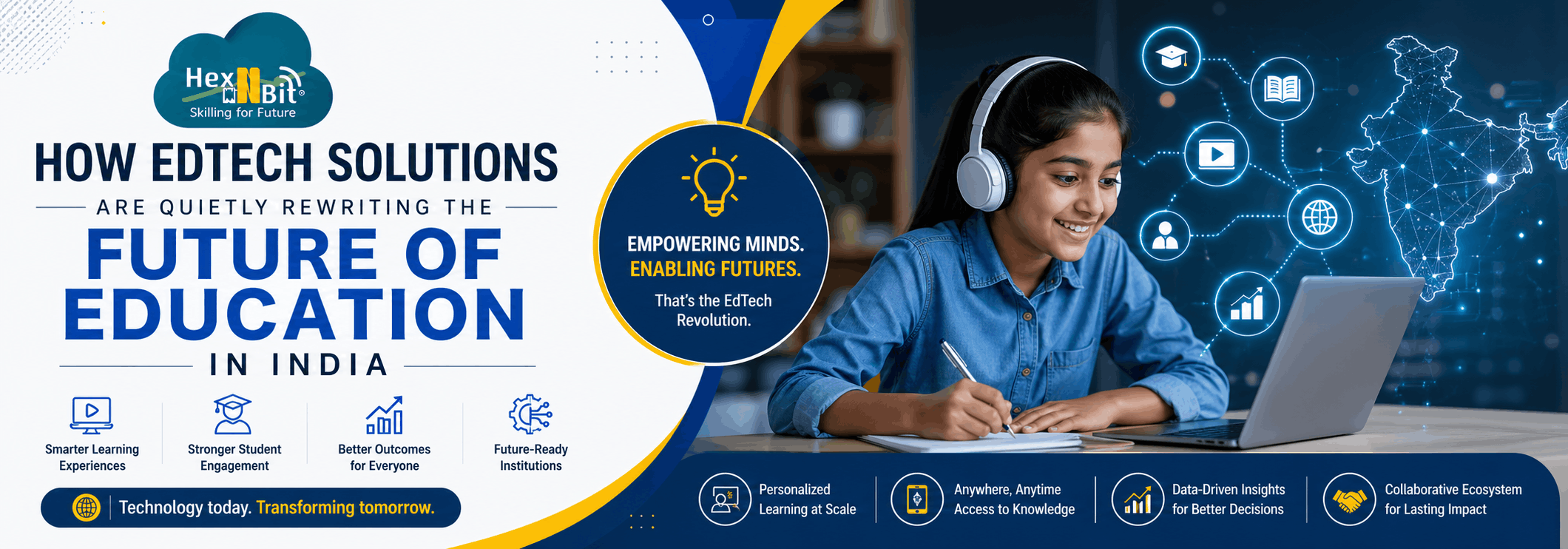
There is a conversation happening in engineering colleges across India that would have seemed far-fetched a decade ago.
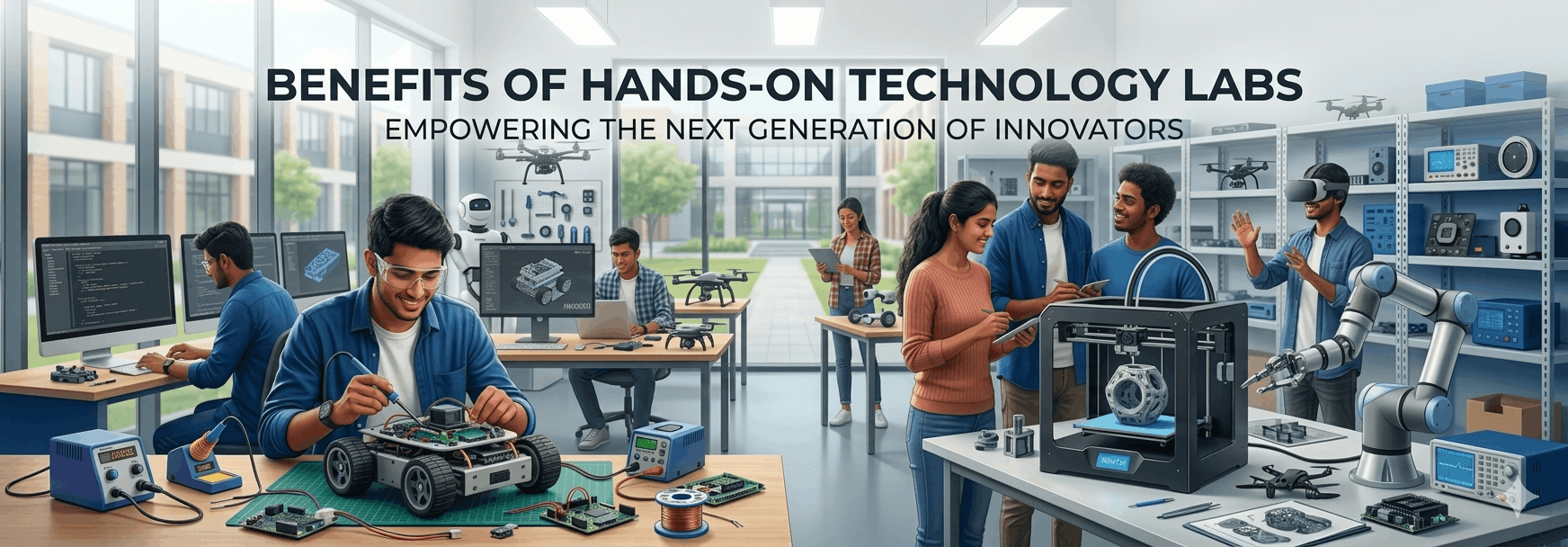
Students are not just studying artificial intelligence from textbooks – they are building AI models. They are not just reading about robotics in theory – they are programming robotic arms and testing them. They are not memorising circuit diagrams for exams – they are designing chips.
This shift is not accidental. It is the result of a quiet but powerful transformation driven by EdTech solutions in India – solutions that are finally bridging the enormous gap between what colleges teach and what industries actually need.
And at the centre of this transformation are companies like HexNBit, which are rethinking what a meaningful education looks like in the 21st century.
The Problem No One Likes to Talk About
Let us be honest about something that everyone in Indian academia privately acknowledges but rarely says out loud: a large number of engineering graduates are not job-ready on the day they receive their degrees.
This is not a failure of intelligence or effort. It is a structural problem. The traditional education system was built for a world that no longer exists – a world where memorising processes and clearing standardised exams was enough to land a stable career.
Today, employers want graduates who can think critically, adapt to new technologies quickly, work in teams, and build things from scratch. And yet, most college curricula are still catching up to technologies that industries adopted years ago.
This is precisely the gap that educational technology solutions are designed to close. Not by replacing teachers or ignoring fundamentals, but by giving students the tools, environments, and experiences they need to connect learning with doing.
What EdTech Solutions in India Actually Look Like Today
When most people hear “EdTech,” they think of online courses, video lectures, and learning apps. And while those have their place, the most impactful EdTech solutions being deployed in Indian colleges today look very different.
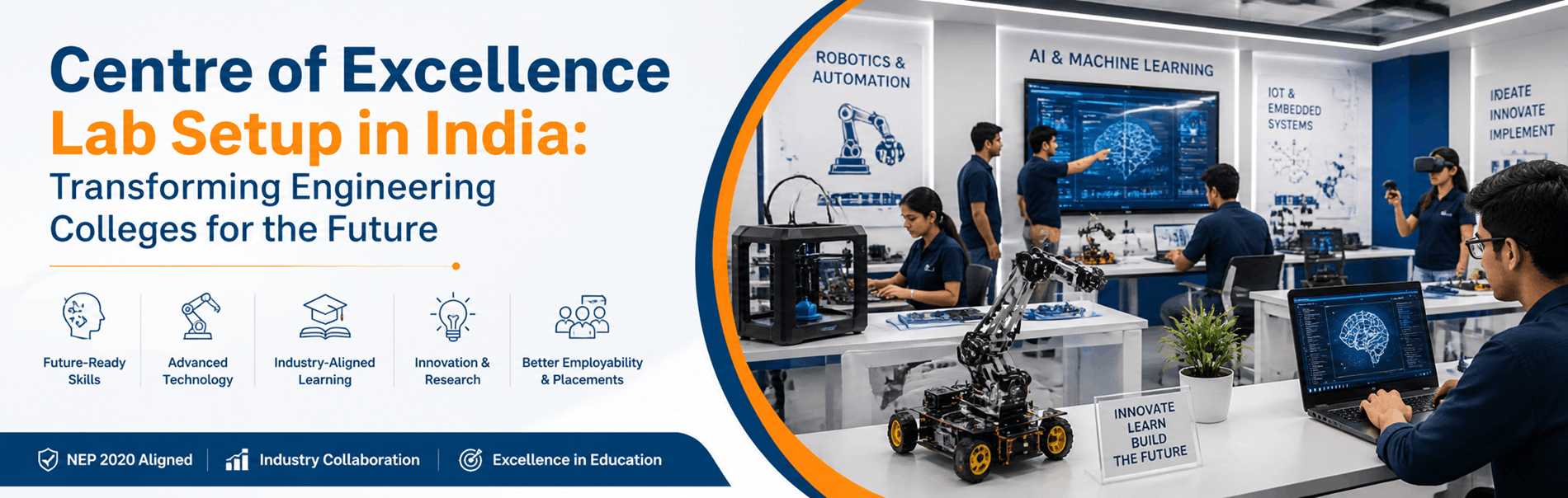
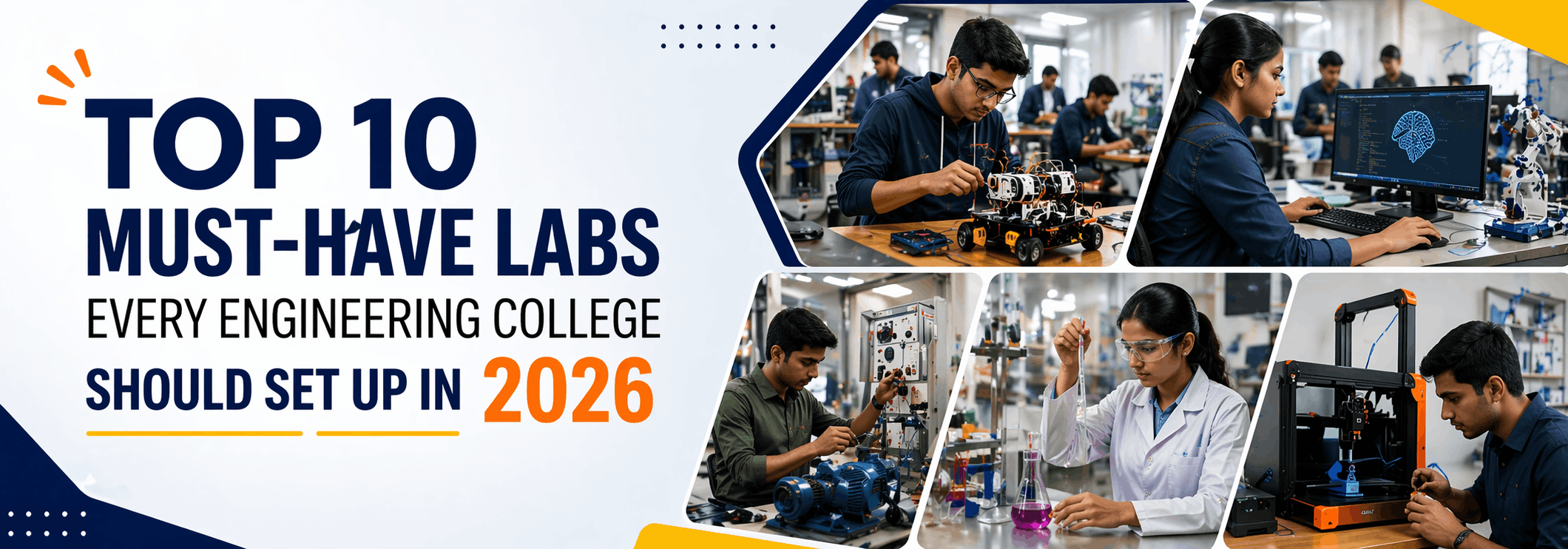
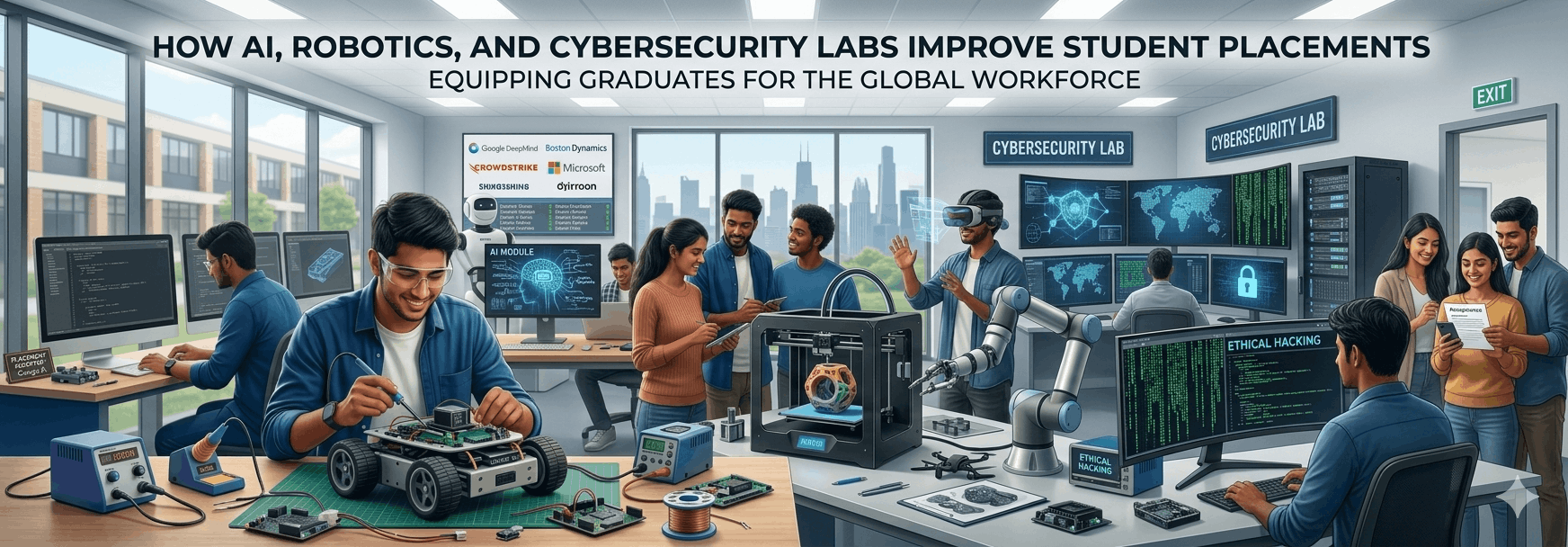
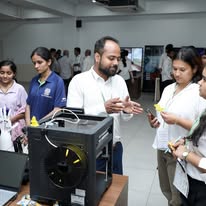
They look like AI and Machine Learning labs where students build predictive models and train neural networks on real datasets. They look like Robotics and IoT labs where students design automation systems and connect physical hardware to cloud platforms. They look like Cybersecurity labs where students practice ethical hacking and learn to defend real digital infrastructures.
These are not virtual simulations or demo environments. These are fully functional innovation spaces equipped with professional-grade tools – and they are being set up in colleges across India right now.
HexNBit, headquartered in Noida, has been at the forefront of this movement. With a portfolio of Centre of Excellence labs that covers everything from AI and Drone Technology to VLSI, Semiconductor Design, AR/VR, Agritech, and DevOps, HexNBit brings a comprehensive vision of what modern technical education should feel like.
Why AI and Robotics Education Is No Longer Optional
A few years ago, AI and robotics were considered niche specialisations – relevant only to students pursuing specific research careers or working at top-tier tech companies.
That is simply no longer true.
AI is embedded in healthcare diagnostics, agricultural monitoring, financial systems, logistics, and manufacturing. Robotics is reshaping assembly lines, warehouses, agriculture, and disaster response. The students who understand these technologies – who have actually worked with them – will have a significant advantage in virtually every industry they choose to enter.
This is why AI and robotics education has moved from being a differentiator to being a baseline expectation for institutions that want their students to remain competitive.
HexNBit’s AI & Machine Learning Lab gives students hands-on experience with data science, neural networks, natural language processing, and computer vision – not as abstract concepts, but as tools they apply to solve real problems. Similarly, the Robotics & IoT Lab takes students through the complete journey of building automation systems – from hardware design to cloud-based monitoring and control.
The difference between a student who has read about these technologies and one who has built with them is enormous. And it is a difference that recruiters notice immediately.
The Rise of STEM Education Companies in India
India has always taken science and mathematics seriously. But STEM education – as a philosophy that integrates Science, Technology, Engineering, and Mathematics into project-based, problem-solving learning experiences – is still evolving in the Indian higher education context.
A genuine STEM education company does not just supply curriculum or equipment. It creates an ecosystem where students are constantly challenged to apply knowledge across disciplines. A civil engineering student and a computer science student might collaborate on a smart infrastructure project. A biotechnology student might work alongside an electronics student to build agricultural monitoring sensors. The boundaries between disciplines dissolve in favour of solving real problems.
HexNBit’s Agritech Lab is a perfect example of this interdisciplinary approach – bringing together IoT sensors, AI algorithms, and agricultural science to give students the tools to modernise farming. The Drone Technology Lab similarly draws on aerodynamics, electronics, navigation systems, and data processing – all in one hands-on environment.
This is STEM education in its most meaningful form: not a subject to study, but a way of thinking and building.
Skill Development Platforms in India – The Missing Piece
Equipment alone does not make a lab transformative. Training does.
This is where skill development platforms in India play a critical role. A lab full of advanced tools without proper curriculum, structured training, and ongoing mentorship is just expensive hardware collecting dust.
The most effective skill development approach combines three things:
1. Structured, outcome-focused curriculum – Learning paths that are built around specific industry-relevant competencies rather than generic theory. Students know exactly what skills they are building and why those skills matter.
2. Hands-on, project-based practice – Every concept is tied to a real task or project. Students build, test, fail, iterate, and improve – which is exactly how learning sticks.
3. Faculty enablement – Teachers need to be trained alongside students. When faculty understand the tools and the pedagogical approach behind them, the quality of learning multiplies significantly.
HexNBit integrates all three elements into every lab setup it delivers. Faculty development workshops, student boot camps, LMS access for continued learning, and periodic training refreshes ensure that the skill development journey does not end after installation day. It continues evolving as students progress and as technologies advance.
Government Initiatives and the EdTech Opportunity
India’s central government has recognised the urgency of modernising higher education, and several policy-level initiatives are creating real opportunity for institutions willing to act.
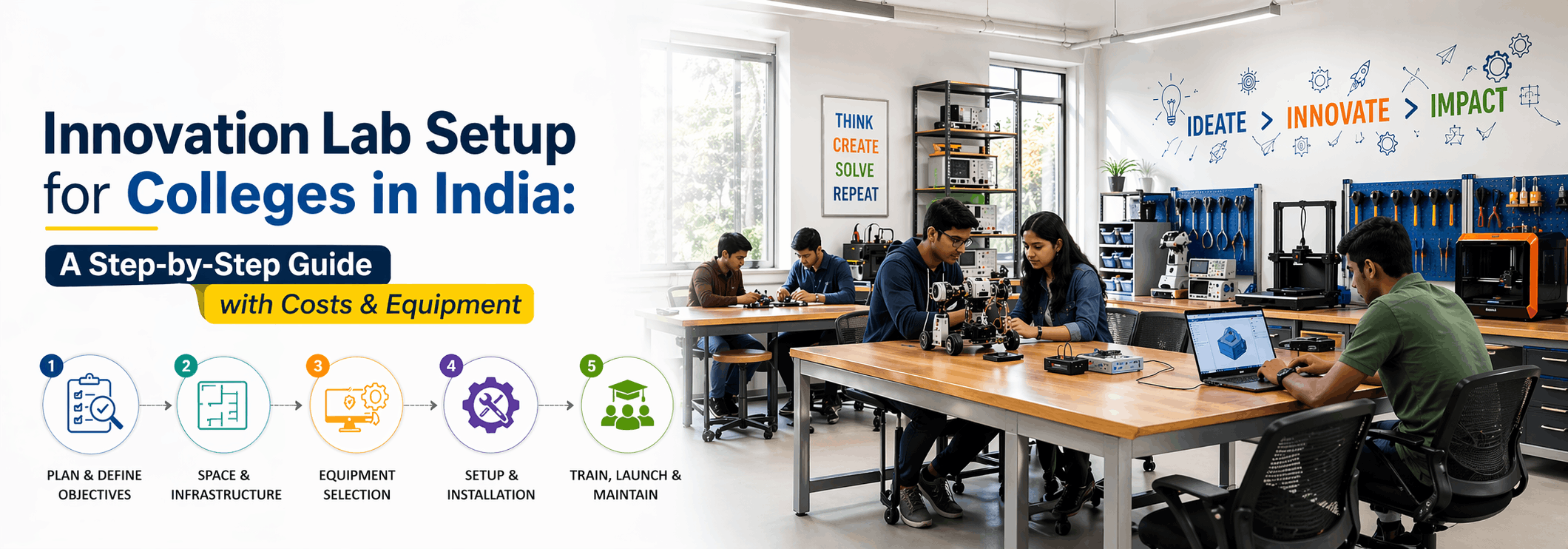
The AICTE IDEA Lab programme – which stands for Innovation, Design, Entrepreneurship, and Application – encourages engineering institutions to establish dedicated innovation spaces where students learn through doing, build prototypes, and develop entrepreneurial thinking. HexNBit has implemented IDEA Labs across multiple institutions, handling everything from AICTE compliance and equipment procurement to curriculum design and training delivery.
The PM-USHA scheme (Pradhan Mantri Uchchatar Shiksha Abhiyan) goes even further – it provides government funding to upgrade higher education institutions with Centres of Excellence, innovation labs, and skill-based learning infrastructure. HexNBit supports institutions in navigating the PM-USHA process end-to-end, from proposal preparation to full lab execution, making it significantly easier for colleges to take advantage of available funding.
These are not just policy programmes. They represent a genuine national commitment to ensuring that Indian students graduate with skills that are relevant, applied, and globally competitive. EdTech companies that understand how to work within these frameworks – and deliver results within them – are becoming essential partners for forward-thinking institutions.
What the Future of Education in India Could Look Like
Imagine walking into a college in 2030 where every department has an innovation lab. Where the computer science students are working alongside mechanical and electronics students on an autonomous vehicle project. Where a first-year student designs her first IoT sensor in October and pitches a product prototype by March. Where teachers are facilitators and mentors, not just information deliverers.
This is not a fantasy. It is already beginning to happen – in colleges that have invested in the right educational technology solutions and partnered with the right EdTech companies.
The institutions that make these investments today will produce a different kind of graduate – one who is confident, capable, and genuinely excited about the problems they can solve. And the institutions that wait will find themselves explaining to students and parents why their facilities are still stuck in the past.
HexNBit’s Role in This Story
HexNBit was founded on a simple but powerful belief: that every college in India – not just the top-ranked ones – deserves access to world-class innovation infrastructure and training.
With a growing portfolio of labs across AI, Robotics, Drone Technology, AR/VR, Cybersecurity, VLSI, Chip Design, Agritech, DevOps, and Cloud – backed by AICTE IDEA Lab and PM-USHA programme support – HexNBit is working to make that belief a reality, one institution at a time.
The team does not just deliver equipment. It builds ecosystems. It trains faculty. It develops curriculum. It stays engaged long after the setup day. And it measures success not in hardware installed, but in students who graduate ready to build the future.
If your institution is ready to take that step – to move from passive learning to active innovation – HexNBit is ready to partner with you.
Final Thought
The conversation happening in Indian colleges today – the one where students are building AI systems, programming robots, and designing chips – is not reserved for elite institutions or students with exceptional resources.
It is a conversation that every college in India can participate in. The technology exists. The government support is available. The EdTech solutions are here.
The only question left is: which institutions will choose to be part of this story?
Want to see what an innovation lab looks like on your campus? Book a free demo with HexNBit →